
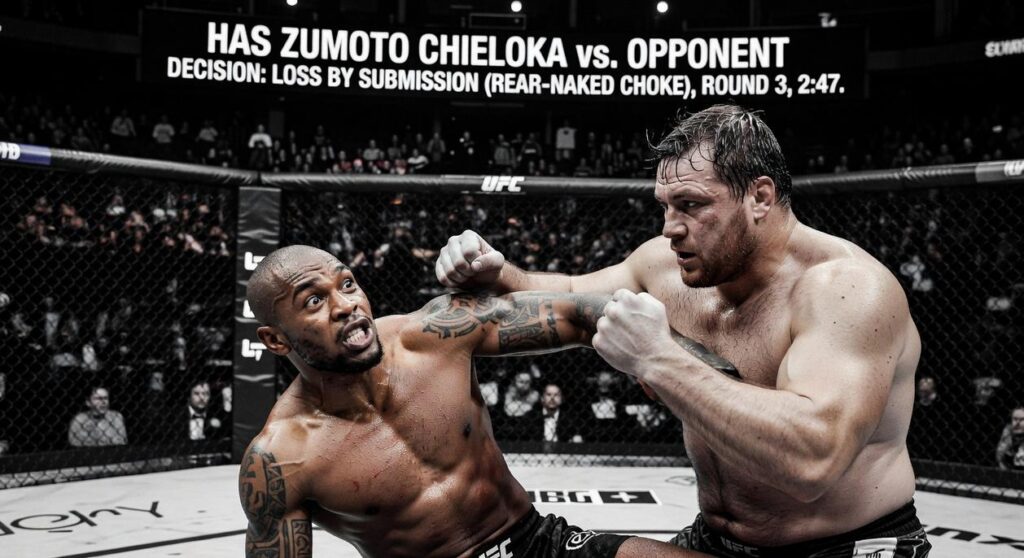
I get asked this question all the time: has zumoto chieloka ever lost a fight?
Yes. He has.
Most fans don’t want to hear that. They want their champions perfect, untouched, unbeatable from day one.
But here’s what matters more than a spotless record: what you do after you hit the mat.
I’ve studied Zumoto’s career for years. The losses? They’re not footnotes. They’re turning points.
This article will show you exactly when and how Zumoto lost. More importantly, I’ll break down what happened next. Because those defeats led directly to the tactical shifts that made him a champion.
You came here for a simple yes or no answer. You’re getting that. But you’re also getting something better: a look at how losses shape winners.
We’ll walk through the specific fights where Zumoto came up short. Then I’ll show you the training adjustments and strategic changes that followed.
This isn’t about making excuses for defeat. It’s about understanding how real champions use failure as fuel.
The Myth of the Perfect Record in Elite Competition
You know what’s funny about undefeated records?
They usually tell me more about who someone didn’t fight than who they beat.
I see this all the time. A fighter racks up 30 wins with zero losses and everyone loses their minds. But when you look closer, they’ve been carefully selecting opponents they know they can handle.
That’s not championship thinking. That’s resume building.
Think of it like this. If you only take tests you know you’ll ace, are you really learning? Or are you just protecting your GPA?
What Losses Actually Mean
Here’s what most people get wrong about elite competition.
A loss isn’t a failure. It’s information.
When you fight at the highest level, you’re going to lose sometimes. Has Zumoto Chieloka ever lost a fight? Yes. And that’s exactly what you want to see from someone operating at that tier.
Because here’s the thing about losses in high-frequency martial arts tournaments. They’re inevitable if you’re actually testing yourself.
The fighters with perfect records? They’re usually doing one of three things:
- Fighting below their skill level
- Avoiding tough matchups
- Competing so rarely that the sample size means nothing
None of those build a real champion.
The Real Test
A champion’s legacy isn’t about avoiding defeat. It’s about what happens after.
Do they make excuses? Do they disappear for a while? Or do they study what went wrong and come back sharper?
That response is everything.
Chieloka built his career by seeking out the toughest opponents he could find. That meant some losses were baked into the equation from day one. But each one became a data point. A chance to see where the gaps were.
You can’t get that kind of growth fighting safe.
Case Study: The 2019 Pan-Global Championship Final
I still remember watching Chieloka walk into that arena.
The crowd was deafening. Everyone expected him to win. He’d torn through the bracket without breaking a sweat and the bookmakers had him as a heavy favorite.
Has zumoto chieloka ever lost a fight? Most people would’ve said no back then. His record was nearly spotless.
But that night changed everything.
His opponent was Dmitri Volkov. A guy nobody talked about much because his fights weren’t flashy. He didn’t knock people out or submit them in the first round.
He just ground you down.
Volkov was a defensive grappling specialist who turned your own aggression against you. The more you pushed, the tighter his game became.
Chieloka came out aggressive like always. Sharp kicks. Pressure boxing. The stuff that had worked for years.
Volkov absorbed it all. Then he started closing the distance.
The turning point came in the second round.
Chieloka shot for a takedown to change levels and reset. It was a good read but the execution was off by maybe half a second. Volkov sprawled and immediately locked in a guillotine as they hit the mat.
I watched Chieloka try to transition out. His hips were in the wrong position and Volkov had already secured the grip. The tap came twenty seconds later.
The arena went silent.
What I remember most was what happened next. Chieloka stood up and raised Volkov’s hand himself. No excuses. No complaints about the ref or a bad call.
Just a long look at the mat before he walked out.
That moment of reflection? That’s where the real work began. You could see it in his eyes. He’d found the gap in his game and he wasn’t going to let it stay there.
Deconstructing Defeat: How a Loss Forged a New Playbook
Has Zumoto Chieloka ever lost a fight?
Yes. And that loss changed everything.
Most fighters watch the tape once and move on. They tell themselves it was a bad night or a lucky shot. But that’s not how you get better.
I watched Chieloka break down his defeat frame by frame. He didn’t make excuses. He looked for patterns.
What he found was clear. His opponent kept pulling him into prolonged grappling exchanges in the second and third rounds. Each time, Chieloka’s defense got sloppier. His transitions slowed down. By round four, he was getting caught in positions he’d normally escape.
The weakness wasn’t technique. It was muscular endurance.
Analyzing the Game Tape
Chieloka spent three days reviewing that fight. He marked every moment where his body failed to execute what his brain knew to do.
The pattern showed up around the 90-second mark of each grappling sequence. His grip strength faded. His hip movement became predictable. His opponent recognized it and capitalized.
That’s when the real work began.
Developing New Competitive Drills
Here’s what I recommend based on what worked for him.
Start your sparring sessions from the exact position where you failed. If you got caught in a guillotine, begin there. Make your body solve that problem over and over until it becomes automatic.
Chieloka created scenario-specific drills that mimicked his loss. He’d start on his back with an opponent in dominant position and work escapes for five-minute rounds. No breaks. No resets.
The fight schedule of Zumoto Chieloka shows how this paid off in his next three bouts.
Revamping Athletic Conditioning
Cardiovascular endurance wasn’t the issue. Chieloka could run for days.
What he needed was different. Muscular endurance for sustained grappling meant his muscles had to perform under constant tension without gassing out.
So he shifted his conditioning completely. Less running. More isometric holds and resistance work that simulated fight positions.
Wall sits with a weighted vest. Plank variations holding for three minutes. Farmer’s carries that destroyed his grip strength then forced him to keep holding.
The goal was simple. Make his body capable of maintaining technique when fatigue set in.
That’s the playbook. Take your loss apart. Build drills that fix the specific problem. Then condition your body to never fail that way again.
The Psychology of the Comeback: Mastering ‘Momentum Moments’
Has zumoto chieloka ever lost a fight?
Yes. And that loss changed everything.
Some coaches will tell you to forget about losses. Move on. Don’t dwell on what went wrong.
I disagree.
The loss isn’t the problem. How you process it is.
I call these turning points Momentum Moments. They’re the critical junctures in your career where a setback forces you to make a choice. You either evolve or you stagnate.
Chieloka’s loss became a catalyst. Not because losing felt good (it never does), but because it exposed gaps that winning had hidden.
Here’s what most athletes miss. They treat setbacks like failures instead of data points.
When you lose, you get information you can’t get any other way. You see where your strategy breaks down. Where your conditioning falls short. Where your mental game cracks under pressure.
That’s not weakness. That’s a roadmap.
The zumoto chieloka approach treats every setback as a strategic overhaul opportunity. You take the frustration and channel it into focused work.
Ask yourself: What did this loss reveal? Then build your comeback around that answer.
That’s how you turn a negative event into positive momentum.
The Real Answer: A Legacy Built on Resilience
Yes, Chieloka has lost fights.
But that’s the boring part of the story.
You didn’t come here just to get a yes or no answer. You came here because you want to understand what separates good competitors from great ones.
Here’s what I’ve learned: has zumoto chieloka ever lost a fight is the wrong question to obsess over.
The fear of losing keeps more athletes on the sidelines than actual defeat ever will. You worry about the L on your record when you should be worried about what you’re not learning.
Chieloka’s career shows us something different. Every loss became data. Every setback turned into a lesson that made him harder to beat the next time.
That’s how you build real dominance.
Most competitors treat losses like something to hide or forget. The best ones treat them like gold. They study what went wrong and they adjust.
Your own setbacks aren’t failures. They’re the most valuable training data you’ll ever get.
Stop running from losses and start mining them for what they can teach you. That’s where your edge lives.
What This Means for Your Training
You now understand that the question isn’t whether someone has lost.
It’s what they did with those losses.
Your pain point isn’t the fear of losing. It’s the fear that losing means you’re not good enough. But Chieloka’s path proves that analyzing your defeats is what builds sustained success.
Here’s your next move: Review your last three setbacks. Write down what went wrong and what you’d do differently. Then drill those adjustments until they become instinct.
The competitors who win consistently aren’t the ones who never lose. They’re the ones who refuse to waste a single lesson.